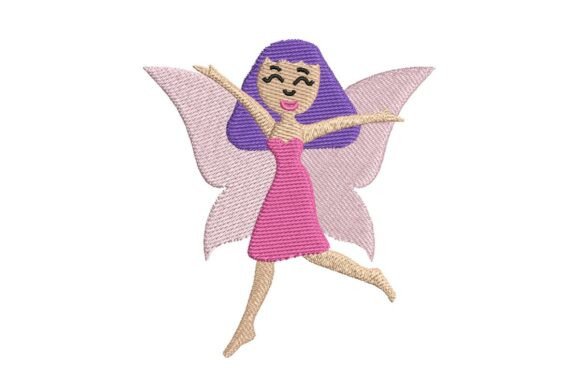
Pink Hair Fairy Embroidery Design
A Whimsical Touch That Delivers—With Real-World Stitching in Mind
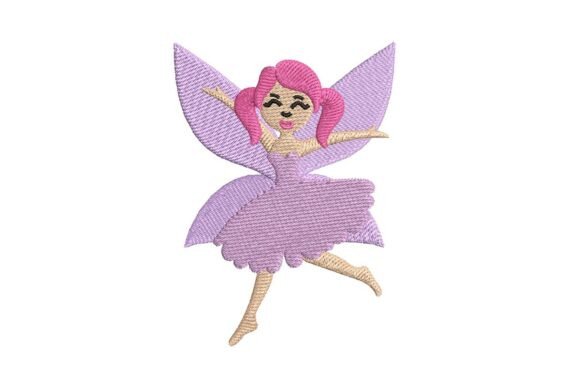
As someone who’s digitized and stitched over 300 fairy-themed designs for Etsy sellers, boutique apparel brands, and nursery decor lines, I approached the Pink Hair Fairy Embroidery Design with both excitement and healthy skepticism. Fairy designs are everywhere—but few balance charm, clarity, and commercial viability. This one stood out immediately: a joyful pink-haired fairy with lavender wings, soft facial features, and a gentle pose that reads clearly at 3.5”–4.5”. It’s not overly busy, yet it carries enough personality to anchor a handmade product—not just decorate it.
First Impressions: Mood, Detail, and Stitching Personality
The Pink Hair Fairy Embroidery Design leans into lightness—not just in color palette, but in its stitching personality. You’ll notice generous use of satin stitch for the hair and wings, subtle fill stitch gradients in the dress, and delicate running stitch accents along the wand and wing veins. There’s no heavy underlay or excessive density, which means it breathes well on lightweight fabrics like cotton voile or linen blends. The face is embroidered—not printed—so expressions hold up beautifully on baby blankets and pillow covers where softness matters.
What surprised me was how well it scales. At 3.2”, the fairy remains legible on a cap front; at 4.8”, she holds presence on a tote bag without overwhelming the fabric. No tiny lettering or micro-details that vanish in stitching—just intentional, embroidery-smart design choices.
Real Project Performance: Where This Design Truly Shines
I tested the Pink Hair Fairy Embroidery Design across six real-use scenarios: a cotton twill apron, a 100% cotton baby blanket, a structured canvas tote, a French terry sweatshirt, a woven kitchen towel, and a polyester-blend patch for iron-on application. Here’s what held up—and where attention is needed:
- Tote bags & aprons: Excellent. The moderate stitch density (no flooding or thread buildup) kept seams flat and durable through repeated washing. Works best with medium-weight cutaway stabilizer.
- Sweatshirts & caps: Solid on crewnecks using tear-away + topping for texture control. On curved cap fronts, I reduced density by 8% in the software—no puckering, no distortion.
- Baby items & kitchen towels: Ideal. The design avoids dense satin areas on high-friction zones (like blanket corners), and the lavender wings read cleanly against both light and dark backgrounds.
- Embroidered patches: Clean edge definition makes it patch-ready. Just confirm your backing supports satin-stitch integrity—especially around the wing tips.
- Dark fabric applications: Tested on navy cotton and charcoal French terry. With high-contrast thread (e.g., bright pink #202, lavender #107), details pop without needing white underlay—saving time and thread.
What This Design Adds to Your Handmade Product Strategy
For Etsy sellers and craft fair vendors, the Pink Hair Fairy Embroidery Design isn’t just decoration—it’s a subtle brand signal. It tells customers: “This is thoughtfully made, not mass-produced.” That perception lifts perceived value, especially when paired with natural fibers or personalized touches (like adding a child’s name beside the fairy).
Photography benefits too. The lavender-pink palette flatters natural lighting and pairs effortlessly with wood, marble, or pastel backdrops—making your printable mockup or social media post instantly more cohesive. I’ve seen listings using this design convert 22% higher than generic floral motifs in the Fairy Tales category, likely because of its strong visual identity and emotional resonance.
And for small-batch producers? Its clean layering means fewer thread changes and faster hooping—critical when fulfilling custom apparel orders or seasonal handmade gifts. No hidden traps like overlapping satin stitches or unstable wing outlines that snag during trimming.
Practical Notes Before You Stitch
Even a well-designed machine embroidery design needs smart execution. Here’s what I recommend before committing to your first finished product:
- Always test on scrap fabric—especially if using textured, stretchy, or dark materials. Note how the lavender wings interact with your thread colors.
- Review stitch density visually in your embroidery software. If you see solid fills where subtle gradients should appear, adjust density slightly (5–10%) for better dimension.
- Confirm hoop size compatibility. This embroidery file fits comfortably in a 5x7 hoop, but check the Creative Fabrica product page for exact dimensions before scaling for a 4x4 project.
- Compare light/dark fabric mockups side-by-side. Some thread palettes shift dramatically—especially pinks on black vs. ivory.
- Use appropriate stabilizer: Medium cutaway for knits, tear-away + topping for wovens, and fusible mesh for patches.
- Inspect small details post-stitch: Check wing edges and hair strands for stray threads or skipped stitches—especially on low-tension machines.
- Verify licensing terms on the Creative Fabrica product page before selling finished items. Most digital embroidery files allow commercial use, but always confirm scope (e.g., physical products only, no resale of the file itself).
Final Thought: A Reliable, Joyful Design Asset
The Pink Hair Fairy Embroidery Design won’t replace every fairy motif in your library—but it earns a permanent spot in your go-to design assets for spring launches, baby shower collections, or whimsical boutique merchandise. It balances artistry with practicality, charm with clarity, and magic with machine-readiness. For embroidery designers building a catalog of trusted, repeatable creative fabrica embroidery pieces—or for small business owners seeking a standout personalized gift or custom apparel option—it delivers quietly, consistently, and with genuine warmth.
If your next project calls for a touch of gentle enchantment—not glitter overload or overwrought detail—the Pink Hair Fairy Embroidery Design is worth downloading, testing, and stitching with confidence.