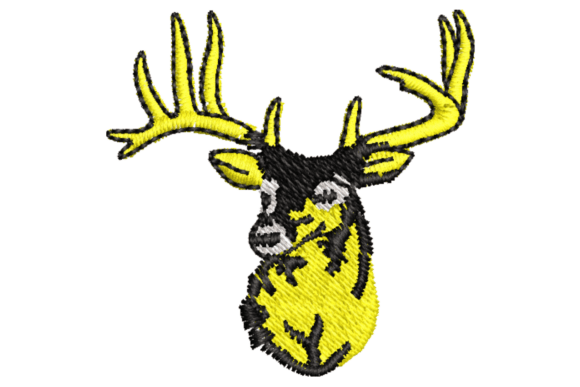
Deer Face Embroidery Design
A Sweet, Subtle Woodland Presence—Not Just Another Cute Animal Stitch
As someone who’s stitched hundreds of woodland-themed designs for clients—from boutique baby blankets to custom aprons for forest-inspired cafés—I opened the Deer Face Embroidery Design expecting charm. What I got was something more intentional: a quiet, expressive face with gentle curves, soft eye detail, and just enough texture to feel handmade without overwhelming the fabric. It doesn’t shout “woodland animals”—it invites you in. That matters when you’re building a cohesive product line or stitching a personalized gift where tone and tenderness are part of the value.
How It Lands on Real Projects (Spoiler: It Works Best When You Let It Breathe)
I tested it first on a linen tea towel—medium-weight, natural fiber, minimal stretch. The result? Crisp satin-stitched antlers, a delicate fill-stitch muzzle, and subtle running-stitch highlights around the eyes that read beautifully at 3.5 inches tall. No puckering. No thread nesting. It felt like the design was made *for* real fabric—not just digitized to fit a hoop.
Then I moved to a heavier use case: a custom embroidered tote bag for a local nature preschool. I placed the Deer Face Embroidery Design centered on the front panel, scaled to 4.25 inches. With tear-away stabilizer underneath and a light cutaway layer beneath the cotton canvas, the stitch density held up cleanly—even across the slight curve of the bag’s gusset seam. Parents responded immediately: “It’s so calm,” one said. “Not too busy. My toddler actually *likes* looking at it.” That’s the unspoken win—this design supports emotional connection, not just decoration.
Where It Shines—and Where You’ll Want to Pause
- Kids’ clothes & baby items: Its rounded silhouette and open facial expression make it ideal for onesies, burp cloths, and crib bumpers. The lack of fine interior lines means it won’t ghost through lightweight interlock or jersey—if you stabilize properly.
- Cushions & pillow covers: Looks especially warm on oatmeal linen or unbleached cotton duck. The antler shape frames nicely in corner placement or centered on a square cover.
- Embroidered patches: Clean outer edge and moderate stitch count mean it converts well to sew-on or iron-on patch format—just confirm your applique design settings match your machine’s capability.
- Holiday & nursery decor: Paired with simple green or cream thread, it reads as gentle and timeless—not seasonal, but quietly celebratory. Perfect for baby showers, woodland weddings, or autumn-themed shop displays.
Watch These Details Before You Stitch
This isn’t a “drop-in-and-go” file if you’re working outside its sweet spot. Here’s what I watched closely:
- Hoop size & placement: The design fits comfortably in a 5x7 hoop—but only if you’re not adding text or borders. If you plan to combine it with monogramming or a tagline, test layout in your embroidery software first. The deer’s head sits high; low-lying ears mean less vertical margin than you might assume.
- Fabric texture & stretch: On slubbed linen or terry cloth, the finer details (like the inner ear contour) softened slightly—still legible, but less precise. On knits? Only with excellent cutaway stabilizer and reduced top tension. Not recommended for ribbed cuffs or curved cap fronts unless you’re experienced with dense fill areas on contoured surfaces.
- Dark fabric contrast: Tested in navy cotton twill with ecru thread—the eyes and muzzle stayed readable, but the antlers lost subtle dimension. For dark backgrounds, consider switching to a tone-on-tone variegated thread or adding a light underlay stitch (if your software allows).
- Wash durability: After three cold-machine washes on a baby blanket swatch, no fraying or loosening—thanks to balanced stitch density and thoughtful satin-to-fill transitions. Still, always advise customers to turn garments inside out before washing.
What It Adds to Your Craft Business—Beyond the Stitch
As an Etsy seller and small shop owner myself, I pay attention to how a design affects perceived value—not just execution. The Deer Face Embroidery Design elevates handmade presentation because it feels curated, not generic. Customers notice the difference between “cute animal” and “thoughtfully composed woodland character.” That nuance builds trust, especially for personalized gifts or boutique branding where consistency matters.
For digital product sellers: this design translates well into printable mockups. Its clean outline and balanced negative space render clearly in flat-lay photos and lifestyle shots—no distracting noise. Pair it with muted palettes (sage, clay, oat) and it becomes instantly recognizable as part of a cohesive Woodland Animals collection.
Practical Designer Notes—No Fluff, Just What You Need
- Always run a test stitch on scrap fabric matching your final project’s weight and stretch.
- Check thread color contrast early—especially for eyes and inner ear. A single shade shift can change the entire mood.
- Review stitch density visually in your software. This design avoids overfilling, but verify no tiny gaps appear in satin-stitched antlers at smaller scales.
- Confirm hoop compatibility before digitizing alternate sizes—some machines struggle with tight curves at under 2.5 inches.
- Inspect small details at actual stitch-out size: the eyelashes are subtle, not fragile. They hold up—but only with proper needle choice (75/11 sharp) and medium-speed stitching.
- Test black-and-white mockups. This design relies on shape and rhythm more than contrast, so it remains effective even without color.
- Use appropriate stabilizer: medium tear-away for stable wovens, cutaway for knits or textured fabrics.
- Verify licensing terms before selling finished products or bundling the Deer Face Embroidery Design with other digital embroidery files—commercial use isn’t automatic.
Final Thought: It’s a Quiet Keeper
In a market flooded with bold, graphic animal motifs, the Deer Face Embroidery Design stands out by being softly memorable. It doesn’t dominate a sweatshirt—it nestles into it. It doesn’t overwhelm a baby onesie—it cradles the neckline. That restraint is rare. And for craft business owners, designers, and makers who value clarity, care, and quiet craftsmanship? That’s not just a design. It’s a reliable collaborator.