Native Tribal Buffalo Silhouette Embroidery Design
A Bold, Symbolic Statement for Small Business Branding
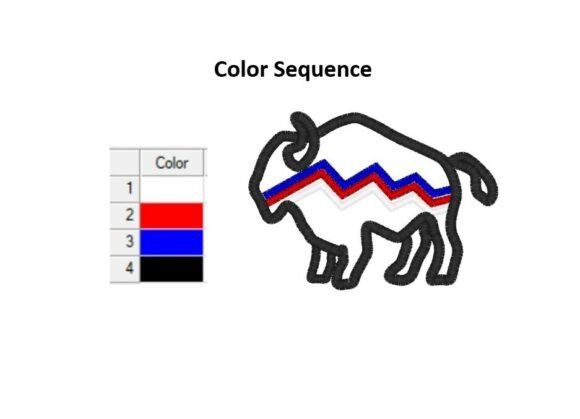
As an embroidery designer who’s developed hundreds of commercial designs for cafés, boutiques, farms, pet brands, and handmade studios, my first impression of the Native Tribal Buffalo Silhouette Embroidery Design is immediate: it’s bold, grounded, and culturally resonant. The buffalo silhouette carries weight—literally and symbolically—while the dynamic red, white, and blue zigzag stripe adds energy without sacrificing clarity. It doesn’t read as purely decorative; instead, it feels intentional, rooted, and ready for real-world use. For small business owners seeking a design that balances tradition with modern visual impact, this isn’t just another machine embroidery design—it’s a brand anchor.
Where This Design Shines in Real Business Applications
The Native Tribal Buffalo Silhouette Embroidery Design excels where many tribal motifs falter: versatility across merchandise categories. As a 2.5"–3.5" embroidered patch, it holds strong on denim jackets, canvas tote bags, and staff aprons—especially for farm-to-table cafés, floral studios, or rustic bakeries wanting to signal authenticity and local pride. On cap fronts, its clean silhouette reads clearly even at reduced scale, and the zigzag stripe gives visual rhythm without overwhelming the curve of the crown. For custom apparel like work shirts or boutique tees, it works beautifully as a chest accent or sleeve detail—adding distinction without shouting.
It also performs well as a product label element: stitched onto burlap sacks for coffee beans, woven tags for handmade soap, or linen pouches for herbal teas. Because the design relies on shape and contrast rather than fine linework, it translates reliably into commercial embroidery—even on textured fabrics like twill, canvas, or medium-weight cotton duck. Etsy sellers and crafters will find it especially effective for printable mockups: the strong silhouette ensures crisp digital previews, helping buyers visualize the finished product before ordering.
Use With Intention: Key Considerations for Professional Results
While powerful, the Native Tribal Buffalo Silhouette Embroidery Design demands thoughtful placement. Avoid using it below 1.75" as an embroidered patch—smaller sizes risk losing definition in the zigzag stripe and softening the buffalo’s outline. Cap embroidery requires special attention: test the design on a curved surface first, as the stripe’s angles may shift slightly if not digitized with cap-ready underlay. Similarly, on dark uniforms or heavily textured fabric (like corduroy or thick fleece), confirm thread color contrast—red, white, and blue threads must pop, not blend.
Stitch density matters. That bold stripe introduces more coverage than a simple outline, so always verify stabilizer choice: medium-weight cutaway works best for structured items like caps and patches, while tear-away suffices for stable woven fabrics like tote bags or aprons. If your small business merch includes frequently washed items (e.g., staff aprons or café towels), run a wash test—ensure the zigzag stripe doesn’t pucker or distort after repeated laundering.
How It Strengthens Brand Identity and Customer Connection
This isn’t just about aesthetics—it’s about resonance. The buffalo evokes strength, resilience, and stewardship—values that align powerfully with farms, eco-conscious boutiques, pet wellness brands, and community-focused studios. When customers see the Native Tribal Buffalo Silhouette Embroidery Design on a reusable tote bag or staff apron, they register intentionality: this business honors tradition, values craftsmanship, and stands for something tangible. That builds trust faster than generic logos ever could.
For handmade product branding, it elevates perceived value. A simple flour sack towel becomes memorable when paired with this embroidered patch. A locally roasted coffee bag gains gravitas with a subtle chest-embroidered version on the seam. Visually, it supports consistency: whether used on packaging, apparel, or digital assets, its strong silhouette ensures recognition across touchpoints—no need for supporting text or secondary marks.
Practical Designer Notes Before You Stitch
Before committing to production, follow these field-tested steps:
- Test in black and white first. Print a grayscale version to assess contrast and balance—does the stripe hold its presence? Does the buffalo’s profile remain distinct?
- Check small-scale legibility. Resize the embroidery file to your smallest intended use (e.g., 1.8" wide) and review spacing between stripe segments and outer edge.
- Confirm thread color contrast against your base fabric—especially for red and blue threads on navy or charcoal garments.
- Inspect spacing and underlay in your embroidery software—tight corners in the zigzag may benefit from reduced stitch density or added stop-stitches.
- Verify hoop size compatibility—some versions of this design may require a 4" x 4" hoop minimum. Always cross-check before digitizing or outsourcing.
- Test on real fabric and stabilizer—a sample stitch-out reveals how the stripe interacts with grain, nap, and tension.
- Create a client-ready mockup—use the design in context (e.g., on a cap or apron photo) to secure approval before bulk production.
- Compare beside existing design assets—does it complement your current logo, typography, and color palette—or compete with it?
- Confirm commercial licensing before using on merchandise for sale. Since this is categorized under Farm and Embroidery, ensure the digital embroidery file permits small business merch, branded patch use, and resale rights.
Final Thought: More Than a Motif—A Meaningful Anchor
The Native Tribal Buffalo Silhouette Embroidery Design succeeds because it bridges symbolism and practicality. It’s not merely “tribal-inspired”—it carries weight, clarity, and adaptability. For small business owners building identity through custom apparel, embroidered patches, or boutique merchandise, this design delivers professionalism without pretense, tradition without cliché, and visual strength without complexity. Used intentionally—with attention to fabric, scale, and context—it becomes more than decoration. It becomes part of your story.