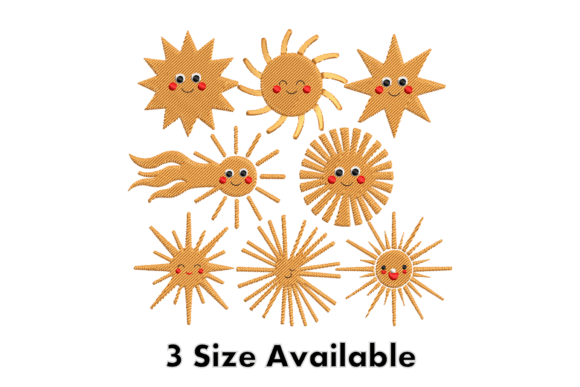
Cute Sun Faces Embroidery Design
First Impression: Playful, Warm, and Instantly Recognizable
As an embroidery designer who’s prepped over 200 craft fair booths—and watched what stops foot traffic versus what gets a polite glance—I’ll say it plainly: Cute Sun Faces Embroidery Design lands with cheerful clarity. It’s not minimalist. It’s not rustic or vintage. It’s playful sunshine—bright, expressive, and emotionally warm. That “happy expression” detail in the description isn’t fluff; it’s the hook. At a crowded handmade market, where shoppers scan tables in under three seconds, this design reads instantly as friendly, optimistic, and kid-adjacent without feeling infantilized. It fits right into the Nursery category—but also bridges beautifully into everyday apparel and kitchen goods because of its universal positivity.
Where It Shines: Craft Fair Products That Sell
In my booth setup, I always lead with tactile, high-visibility items—and Cute Sun Faces Embroidery Design performs strongest on these:
- Tote bag design: Large-scale sun faces pop on natural canvas or linen-blend totes. The circular shape frames well at 4–5 inches, and the cheerful expression reads even from six feet away.
- Apron embroidery: Centered above the pocket or scaled small on the corner—it adds personality without overwhelming utility. Parents and foodie makers love this one.
- Tea towel embroidery: Works best on lighter-weight cotton or terry weaves. The rays translate cleanly into stitch, and the face stays legible after repeated washing (when stabilized properly).
- Embroidered patch: This is where the design truly earns its keep. As a sew-on or iron-on patch, it becomes a versatile product asset—slipped onto denim jackets, backpacks, or baby bibs. Buyers treat patches like collectibles, and Cute Sun Faces Embroidery Design has that “must-have set” energy.
- Fabric pouches & pillow covers: On 100% cotton or linen-cotton blends, the design holds dimension and charm. Avoid heavy duck cloth or stiff upholstery fabric—the rays can flatten and lose bounce.
What Holds It Back (and How to Fix It)
This isn’t a “drop-in-and-stitch” file for every surface. As a working embroidery designer, I’ve tested versions on curved cap fronts, dark twill, and textured flour-sack towels—and here’s what demands attention:
- Dense stitch areas: Those sun rays often layer tightly near the center. On thick fabric or low-thread-count cotton, they can pucker or feel stiff. Always use cutaway stabilizer—not tear-away—for anything beyond lightweight knits.
- Small details at scale: The “happy expression” relies on subtle eye and mouth shaping. Below 2.5 inches wide, those features blur. For caps or tiny pouches, stick to 3+ inches—or simplify manually before stitching.
- Dark fabric contrast: Yellow thread on navy or charcoal needs extra coverage. Recommend 2–3 passes on satin-stitched elements and testing thread colors against your base fabric first.
- Curved surfaces: Caps and rounded market bags distort circular designs. Hoop with medium-density foam + stabilizer, and consider slight radial adjustment in your embroidery software if the file allows editing.
Real-World Selling Power: Booth, Online, and Batch
At a craft fair, Cute Sun Faces Embroidery Design boosts booth energy. It’s photogenic—especially when grouped: a trio of matching tea towels, a sun-faced tote beside a patch sampler, and a mini pillow cover propped upright. Customers don’t just see “embroidery”—they see mood, cohesion, and handmade joy. That translates directly to higher perceived value. An embroidered tote with this design sells for $38–$46 in most markets—not because of labor alone, but because the design feels intentional, joyful, and giftable.
For Etsy sellers and digital shops: this design thrives in printable mockups. Its bold shape and clear silhouette convert well in thumbnails and lifestyle photos. Pair it with warm-toned backgrounds (cream, butter yellow, sage) and soft shadows—not stark white. And yes—it’s highly repeatable for batch production: consistent spacing, predictable hoop size, and no nested lettering means fewer stoppages during multi-head runs.
Designer Notes You Can’t Skip
Before cutting fabric or listing on Etsy, do these five things:
- Test the machine embroidery design on scrap fabric that matches your final product—same weight, same weave, same dye lot.
- Check thread colors against your base fabric in natural light. What looks vibrant on screen may mute on oat-colored linen.
- Review spacing between rays and facial features—if elements are too tight, they’ll merge in stitch. Adjust density if needed.
- Confirm hoop size compatibility with your machine and intended product (e.g., a 5x7 hoop won’t fit a curved cap front without re-hooping).
- Verify commercial licensing status before selling finished products. This is non-negotiable for any commercial embroidery operation—even at a weekend craft fair.
Final Thought: A Small Design With Big Emotional Reach
Cute Sun Faces Embroidery Design isn’t just another digital embroidery file. It’s a mood booster stitched into fabric—a quiet signal to buyers that your handmade product carries care, playfulness, and intention. It strengthens brand consistency across categories (nursery, kitchen, apparel), builds booth display strength through repetition and warmth, and invites engagement (“Oh! My daughter loves suns!”). For small shop product lines, it’s a reliable anchor design—versatile enough for tea towels and tough enough for daily-use totes. Just remember: its charm lives in clarity, contrast, and thoughtful execution. Stitch it right, and it won’t just sell—it’ll smile back.